

Skid-mounted fuel stations, mobile fuel stations, and containerized fuel stations are becoming practical solutions for mining sites, construction projects, logistics fleets, farms, remote communities, and private fuel storage projects.
Compared with a traditional fixed fuel station, a skid-mounted fuel station can be faster to install, easier to transport, and more flexible for project-based fuel supply. However, in many emerging markets, this type of product is still relatively new. Some customers are interested in the solution, but they are not sure which government department they should contact before importation, installation, or operation.
This is a very common question:
Do I need to contact the energy authority?
Is it treated as ordinary fuel equipment or a petroleum facility?
Do I need approval from the fire department?
Does the fuel dispenser need calibration?
Is there a different requirement for private use and public fuel retailing?
The answer depends on the country, project location, fuel type, tank capacity, and business model. This article provides a practical checklist to help importers, distributors, and project owners understand which authorities may be involved before purchasing or installing a skid-mounted fuel station.
This article is for general guidance only. Local laws and approval procedures vary from country to country. Before starting a project, customers should always confirm the exact requirements with local authorities, licensed consultants, or legal advisors.
1. First, Define the Purpose of the Project
Before asking which department to contact, the first question should be:
How will the skid-mounted fuel station be used?
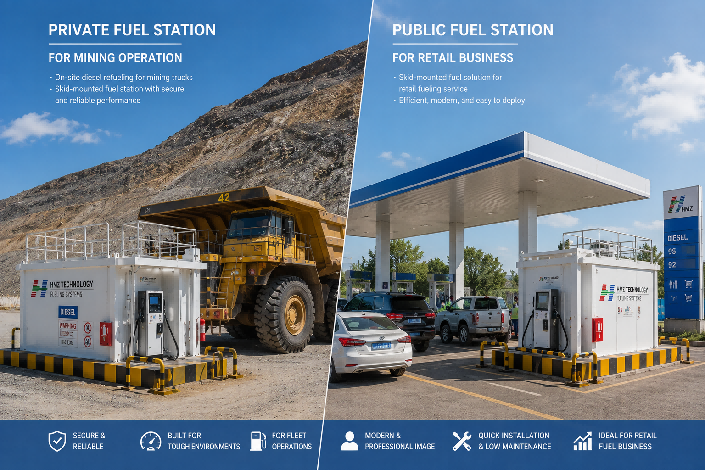
In most countries, the approval process is different depending on whether the fuel station is used for private internal fueling or public fuel retailing.
Private or Internal Use
Private use normally means the fuel station is used only for the owner’s own vehicles, machinery, or project equipment.
Common examples include:
- Mining site diesel refueling
- Construction machinery refueling
- Logistics fleet depot fueling
- Farm or agricultural equipment fueling
- Generator fuel supply
- Industrial plant internal fuel storage
- Remote project camp fuel supply
In these cases, the project may still need approval for fuel storage, fire safety, environmental protection, importation, and equipment compliance. However, it may not be treated the same as a public petrol station that sells fuel to outside customers.
Public Retail Fuel Sales
Public retail use means the fuel station will sell fuel to third-party customers, vehicles, or the general public.
In this case, the project may be treated as a formal petroleum retail station. The customer may need a retail fuel station license, a petroleum business license, site approval, local government approval, environmental approval, fire approval, and metrology approval for fuel dispensers.
This is usually a more complex approval process.
Why This Difference Matters
The same skid-mounted fuel station equipment may be used in different scenarios, but the regulatory requirements may change depending on the business model.
A 30,000L skid-mounted diesel station used inside a mining site may be reviewed differently from a 30,000L fuel station selling diesel and gasoline to public vehicles beside a highway.
That is why the first step is not only to check the equipment specification, but also to clearly define the project purpose.
2. Is It Fuel Equipment or a Petroleum Facility?
Another important question is how the local authority classifies the product.
A skid-mounted fuel station is not just a single machine. It may include:
- Fuel storage tank
- Fuel dispenser
- Pumping system
- Flow meter
- Piping and valves
- Emergency shut-off system
- Explosion-proof electrical system
- Leakage collection or containment structure
- Fire safety interfaces
- Control cabinet
- Optional canopy or containerized structure
Because of this, different countries may treat the product differently.
Some authorities may first classify it as imported mechanical equipment. Others may consider it a petroleum storage and dispensing facility. In some cases, both classifications may apply.
This is why customers should not only ask, “Can I import this product?” They should also ask, “Can I install and operate this product at my site?”
Import approval and operation approval are not always the same thing.
Skid-mounted fuel station vs traditional fuel station
3. Main Departments You May Need to Contact
The exact names of departments vary by country. However, for most skid-mounted fuel station projects, customers may need to check with the following types of authorities.
3.1 Energy or Petroleum Regulatory Authority
This is usually the most important authority when the project involves fuel storage, petroleum distribution, or fuel retailing.
Depending on the country, this department may be called:
- Energy Regulatory Authority
- Petroleum Regulatory Authority
- Ministry of Energy
- Department of Petroleum
- Oil and Gas Regulatory Authority
- National Energy Commission
This authority may be responsible for:
- Petroleum storage license
- Fuel retail station license
- Petroleum import or distribution license
- Fuel transportation license
- Service station operation approval
- Technical safety rules for petroleum facilities
If the customer only imports fuel station equipment for resale, the energy authority may not be the first department for equipment import. But if the customer wants to install, store fuel, dispense fuel, or operate a fuel station, the energy or petroleum regulator is usually one of the key authorities to consult.
Recommended question to ask:
“We plan to import and install a skid-mounted fuel station with an aboveground storage tank and fuel dispenser. Will this be classified as petroleum storage equipment, a fuel retail station, or an internal fuel facility under local regulations?”
3.2 Customs and Import Licensing Authority
Before the equipment can enter the country, the importer must confirm customs and import requirements.
This may involve:
- Customs authority
- Ministry of Trade
- Import licensing department
- Revenue authority
- Trade and Industry Department
The importer may need to confirm:
- HS code classification
- Import duty and VAT
- Whether an import permit is required
- Whether pre-shipment inspection is required
- Whether technical documents are needed before customs clearance
- Whether the equipment is restricted or controlled because it is related to petroleum handling
For a skid-mounted fuel station, the HS code may depend on how the equipment is declared: tank, fuel dispenser, pump system, complete station, containerized unit, or other machinery. The local customs broker should confirm the final classification.
Recommended question to ask:
“We plan to import a skid-mounted fuel station, including fuel tank, dispenser, pump, and piping system. What import documents, HS code classification, and technical compliance documents are required for customs clearance?

3.3 Standards, Certification, and Metrology Authority
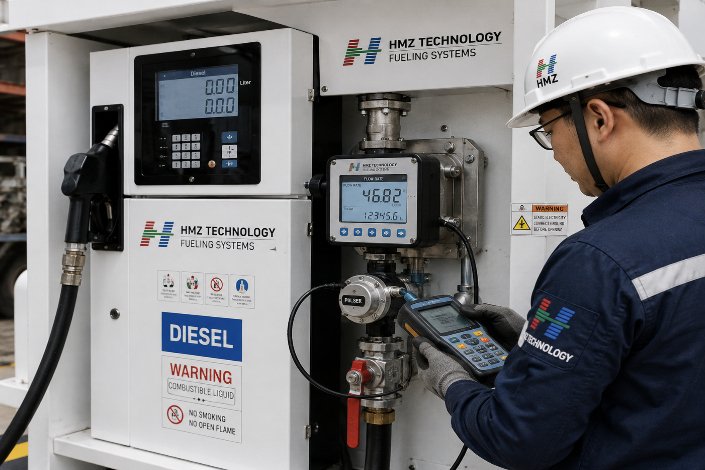
Fuel station equipment often involves safety and measurement accuracy. Therefore, the national standards or metrology authority may be involved.
This department may be called:
- Bureau of Standards
- National Standards Authority
- Legal Metrology Department
- Weights and Measures Department
- Product Certification Authority
This authority may check:
- Product conformity
- Applicable national standards
- Fuel dispenser measurement accuracy
- Flow meter calibration
- Explosion-proof electrical compliance
- Tank manufacturing standard
- Labeling and documentation requirements
- Periodic inspection or verification requirements
This is especially important for fuel dispensers and flow meters because they are used for trade measurement. If fuel is sold to customers, the dispenser may need to be approved, calibrated, or verified by the local metrology authority.
Recommended question to ask:
“Do fuel dispensers, flow meters, or measuring devices require local type approval, calibration, or verification before commercial use?”
Choose the right mobile fuel station
3.4 Fire Safety Authority
A skid-mounted fuel station stores and dispenses flammable liquids. Fire safety approval is therefore one of the most important parts of the project.
This authority may be:
- Fire department
- Fire and rescue authority
- Civil defense department
- Fire safety bureau
- Local emergency management department
They may review:
- Tank location
- Safety distance
- Fire extinguisher arrangement
- Emergency shut-off system
- Electrical explosion-proof design
- Fuel unloading area
- Vehicle access
- Spill control
- Venting system
- Fire response plan
- Site layout drawing
For gasoline projects, fire safety requirements are usually stricter because gasoline is more volatile than diesel. Diesel-only sites may still require approval, but the risk classification can be different.
Recommended question to ask:
“What fire safety approval is required for an aboveground skid-mounted fuel station storing diesel, gasoline, or both?”
3.5 Environmental Protection Authority
Fuel storage and dispensing projects may create environmental risks, especially fuel leakage, soil contamination, wastewater, vapor emissions, and accidental spills.
The environmental authority may require:
- Environmental impact assessment
- Spill prevention plan
- Secondary containment
- Drainage and oil-water separation design
- Soil and groundwater protection measures
- Waste handling plan
- Decommissioning plan
- Emergency response procedure
For small private-use projects, the requirement may be simpler. For public stations, large storage capacity, or environmentally sensitive locations, the review may be more detailed.
Recommended question to ask:
“Does this skid-mounted fuel station project require an environmental permit, environmental impact assessment, or spill containment design approval?”
3.6 Local Government, Municipality, or Planning Authority
Even if the equipment is technically acceptable, the project site itself must be suitable.
The local government or municipality may review:
- Land use
- Zoning
- Building permit
- Site access
- Road safety
- Distance from buildings
- Distance from residential areas
- Drainage
- Business operation license
- Signage and public access
For a public fuel station, local planning approval can be very important. The site may need to be located in a permitted commercial, industrial, or transport zone.
For internal-use projects, such as mining sites or logistics depots, the approval may be handled through industrial site permits or project site safety requirements.
Recommended question to ask:
“Is this site approved for fuel storage and vehicle refueling activities under local zoning and planning rules?”
3.7 Industry-Specific Authorities
Some skid-mounted fuel stations are used in special industries. In these cases, additional authorities may be involved.
For example:
- Mining authority for mining sites
- Transport authority for fleet depots or highway service areas
- Port authority for fuel supply at ports
- Aviation authority for aviation fuel projects
- Military or defense department for military fuel projects
- Agricultural authority for large farming projects
- Industrial park management authority for factory sites
These authorities may not replace the energy, fire, or environmental departments, but they may add extra project-specific requirements.
Recommended question to ask:
“Because this fuel station will be used in a mining, logistics, port, and industrial site, are there any additional industry-specific approvals required?”
4. Documents Usually Required Before Importation or Installation
Before contacting local authorities, it is better to prepare a basic technical document package. This helps the authority understand the equipment and reduces communication time.
Common documents may include:
Company and Project Documents
- Importer or project owner company registration
- Business license
- Tax registration
- Project description
- Site address
- Intended use: private use or public retail
- Fuel type: diesel, gasoline, kerosene, or other fuel
- Estimated daily fuel volume
Equipment Technical Documents
- Product catalog
- General arrangement drawing
- Tank capacity and dimensions
- Tank material and thickness
- Pump and dispenser specifications
- Flow meter specification
- Piping and valve layout
- Electrical system description
- Explosion-proof component information
- Emergency stop system
- Grounding design
- Anti-leakage or containment design
- Fuel unloading method
Safety and Compliance Documents
- Welding and tank inspection documents, if available
- Pressure or leakage test report, if applicable
- Explosion-proof certificate, if applicable
- Quality management certificate, if available
- Installation manual
- Operation manual
- Maintenance manual
- Safety instructions
- Emergency response procedure
- Fire extinguisher arrangement recommendation
- Material Safety Data Sheet for fuel, if required by the local authority
Site Documents
- Site layout drawing
- Foundation drawing
- Distance from buildings and roads
- Vehicle entry and exit route
- Drainage plan
- Fire access route
- Environmental protection measures
- Photos or a satellite view of the proposed site
The more complete the information package is, the easier it is for local departments to determine the right approval path.
Mining site fuel station solution
5. Recommended Approval Workflow for Customers
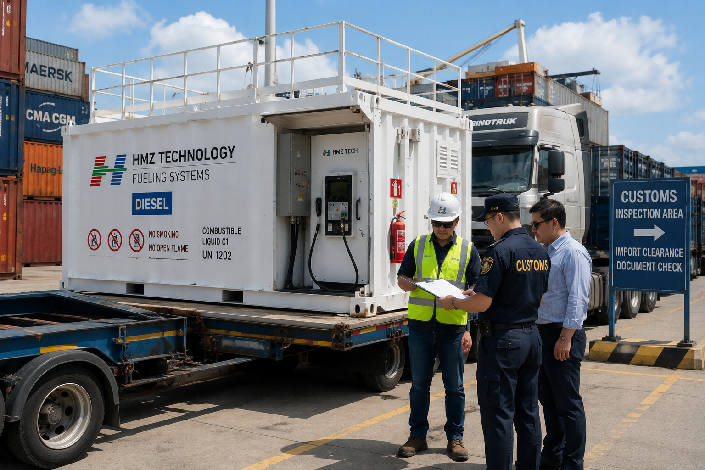
For customers who are not familiar with local approval procedures, the following workflow can be used as a practical starting point.
Step 1: Confirm the Business Model
Decide whether the fuel station is for:
- Private internal use
- Commercial fuel retail
- Fuel distribution
- Temporary project fueling
- Mining or construction project use
- Emergency fuel supply
- Remote community fuel supply
This will influence which license is required.
Step 2: Confirm Fuel Type and Tank Capacity
Different fuels and capacities may have different risk levels.
Key information includes:
- Diesel only or gasoline included
- Single tank or multiple tanks
- Total storage capacity
- Aboveground or containerized design
- Daily dispensing volume
- Whether fuel will be sold to the public
Step 3: Contact the Energy or Petroleum Authority
Ask whether the project requires a petroleum storage license, fuel retail license, petroleum facility approval, or other energy-related permit.
Step 4: Contact Standards and Metrology Authority
Confirm whether the dispenser, flow meter, and measuring system require local approval, calibration or verification.
Step 5: Contact Fire Safety Authority
Submit the preliminary layout, tank capacity, fuel type, and safety system information for fire safety review.
Step 6: Contact Environmental Authority
Confirm whether environmental approval, spill containment design, or environmental impact assessment is required.
Step 7: Contact Customs and Import Authority
Before shipment, confirm import documents, HS code, import permit, and any product compliance documents required for customs clearance.
Step 8: Confirm Local Site Approval
Check zoning, land use, construction permit, and local business license requirements with the municipality or local government.
Step 9: Prepare the Final Technical Submission
After the requirements are clear, prepare a complete technical file for approval, installation, and operation.
6. Private Fueling vs Public Fuel Retailing: What Is the Difference?
This is one of the most important points for customers to understand.
A skid-mounted fuel station used by a mining company to refuel its own trucks is not always regulated in the same way as a roadside fuel station selling fuel to public vehicles.
Private Fueling Project
A private fueling project may focus more on:
- Fuel storage safety
- Fire safety
- Internal operation procedure
- Environmental protection
- Equipment compliance
- Site safety management
Public Fuel Retail Project
A public retail station may require more approvals, including:
- Petroleum retail license
- Business operation license
- Fuel quality control
- Metering and dispenser verification
- Public safety requirements
- Pricing or reporting requirements in some countries
- Regular inspections
- Consumer protection rules
Before investing in equipment, customers should clearly explain the intended use to the local authority. A wrong classification at the beginning may delay the project later.
Containerized fuel station for remote areas
7. Questions to Ask Local Authorities Before Purchasing
Here is a simple checklist customers can use when communicating with local departments:
- Is a skid-mounted fuel station allowed in our country or region?
- Is it classified as fuel equipment, a petroleum storage facility, or a retail service station?
- Is it allowed for private internal use?
- Is it allowed for public fuel retailing?
- What license is required for diesel-only storage and dispensing?
- What additional requirements apply if gasoline is included?
- What is the maximum allowed aboveground tank capacity?
- Are there specific tank standards required?
- Does the fuel dispenser need local calibration or metrology verification?
- Does the project require fire department approval?
- Does the project require environmental approval?
- Does the site require municipal or planning approval?
- Are there import permits or product conformity certificates required before shipment?
- Are explosion-proof certificates required for electrical components?
- What documents should be submitted before installation?
These questions can help customers avoid unclear communication and identify the correct approval path early.
8. How HMZ Supports Customers
HMZ is a manufacturer and solution provider of skid-mounted fuel stations, mobile fuel stations, containerized fuel stations, and related fuel station equipment.
Although local licenses and permits must be confirmed by the customer or local project owner, HMZ can support the technical communication process by providing:
- Product specification sheets
- Tank capacity and dimension drawings
- General arrangement drawings
- Pump and dispenser technical data
- Flow meter information
- Electrical and control system description
- Explosion-proof component information, if applicable
- Installation guidance
- Operation and maintenance manuals
- Loading and shipping information
- Project configuration suggestions
- Customized design based on fuel type, tank capacity, and site condition
For customers entering a new market or preparing their first skid-mounted fuel station project, technical clarity is very important. A complete equipment file can help local authorities, consultants, and project teams better understand the product.
9. Final Advice Before Starting a Skid-Mounted Fuel Station Project
A skid-mounted fuel station can be a flexible and cost-effective solution, especially for remote sites, fast-deployment fuel supply, and project-based operations. However, it still involves flammable liquids, storage tanks, fuel dispensing, and environmental safety.
Before placing an order, customers should not only compare equipment prices. They should also confirm the local approval path.
The safest approach is:
- Define the project’s use clearly
- Confirm fuel type and tank capacity
- Ask whether the project is private or public retail
- Contact the energy or petroleum authority
- Confirm fire and environmental requirements
- Check standards and metrology requirements
- Confirm import and customs documents
- Prepare technical documents before shipment
By doing this, customers can reduce project risk, avoid customs delays, and improve the chance of smooth installation and operation.
If you are planning to import or install a skid-mounted fuel station, HMZ can help you prepare the technical information needed for early discussion with local authorities and project consultants.
FAQ
1. Do I need a license to import a skid-mounted fuel station?
In many countries, the importer may need to confirm import permits, customs classification, and product compliance documents before shipment. If the equipment will be used for fuel storage or dispensing, additional approval may be required from energy, fire, environmental, or standards authorities.
2. Is a skid-mounted fuel station treated the same as a traditional fuel station?
Not always. It depends on the country and the project’s use. A unit used for private fleet fueling may be reviewed differently from a public retail fuel station selling fuel to outside customers.
3. Which department should I contact first?
For operation approval, the energy or petroleum regulatory authority is usually a good starting point. For equipment import, the importer should also check with customs, trade, and standards authorities. Fire and environmental departments should be consulted before installation.
4. Does the fuel dispenser need calibration?
If the fuel dispenser is used for commercial fuel sales, many countries require metrology verification or calibration by the local legal metrology or weights and measures authority. Private-use requirements may differ by location.
5. Are diesel and gasoline projects approved in the same way?
Usually not. Gasoline is more volatile and may involve stricter fire and explosion-proof requirements. Diesel-only projects may still need approval, but the risk classification can be different.
6. Can HMZ help customers apply for local licenses?
HMZ does not replace local authorities or legal consultants. However, HMZ can provide technical documents, drawings, specifications, and product information to support customers during communication with local departments.
