
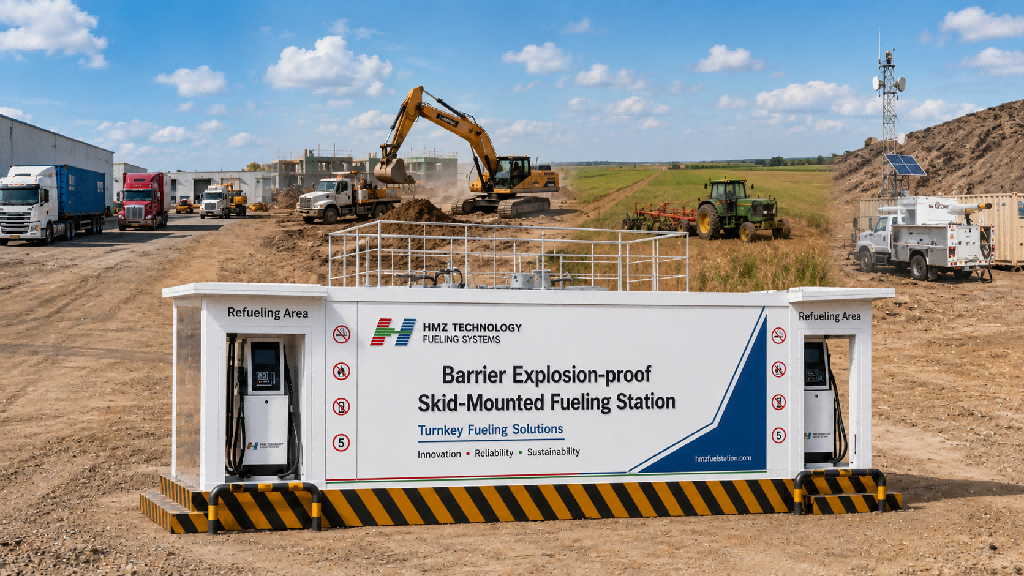
Choosing the right mobile fuel station is an important decision for any project that depends on a stable fuel supply.
Mining sites, construction projects, logistics yards, farms, oil and gas operations, remote industrial facilities, and emergency service projects often need fuel available directly on site. In these situations, relying only on external fuel stations or daily fuel delivery can increase downtime, transportation costs, and operational risk.
A mobile fuel station can help solve these problems by integrating fuel storage, dispensing, pumping, safety protection, and control systems into one movable or skid-mounted unit.
However, not every mobile fuel station is suitable for every project. The right solution depends on your fuel demand, project location, safety requirements, operating environment, transportation conditions, and long-term usage plan.
In this guide, we explain the key factors you should consider when choosing a mobile fuel station for your project.
What a skid-mounted fuel station is and how it works
1. Understand Your Project Application
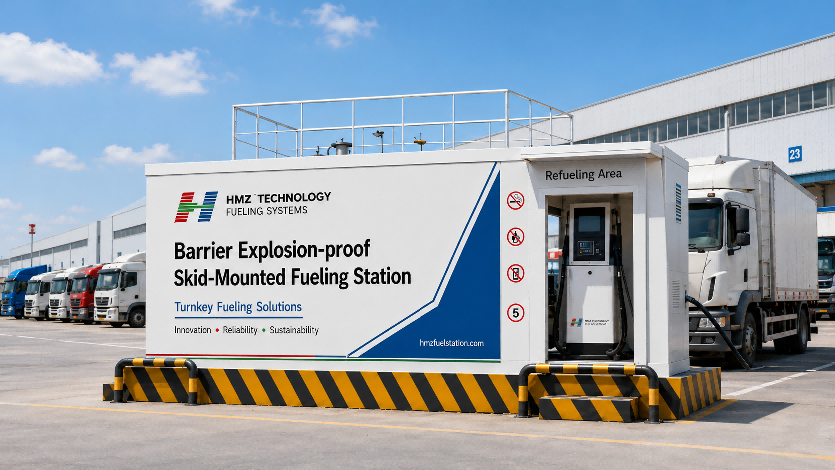
The first step is to define where and how the mobile fuel station will be used.
Different applications have different fueling requirements.
For example, a mining site may need large fuel storage capacity and high-flow dispensing for heavy-duty trucks. A construction site may need a compact and flexible system that can move as the project progresses. A farm may need seasonal fuel storage for tractors and agricultural machinery. A logistics yard may require fuel management for a fleet of trucks.
Common application scenarios include:
- Mining sites
- Construction projects
- Oil and gas operations
- Agricultural farms
- Logistics and transport yards
- Remote industrial facilities
- Emergency fuel supply
- Temporary project camps
- Road and infrastructure construction
- Remote power generation sites
Before choosing the equipment, you should clearly understand your real operating scenario. This helps determine tank capacity, dispenser quantity, safety design, and mobility requirements.
2. Calculate Your Daily Fuel Consumption
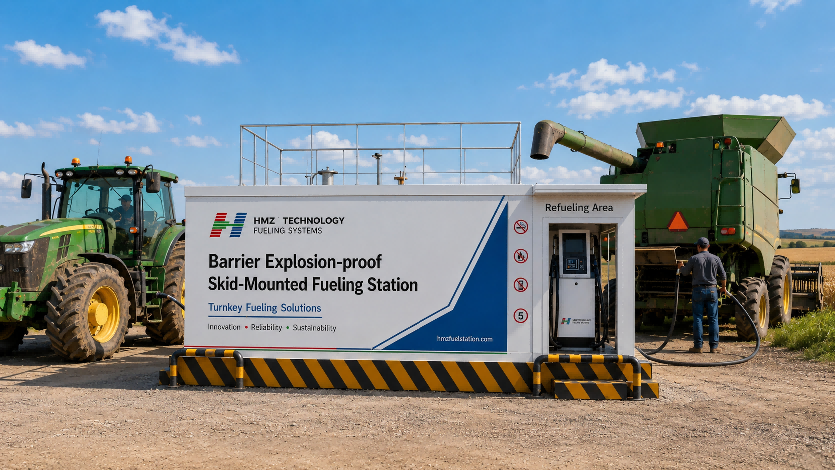
Fuel consumption is one of the most important factors when selecting a mobile fuel station.
If the tank is too small, you may need frequent fuel deliveries, which increases transportation costs and operational interruption. If the tank is too large, the initial investment and site requirements may be higher than necessary.
You should estimate:
- Number of vehicles or machines to be fueled daily
- Average fuel consumption per vehicle or machine
- Daily operating hours
- Fuel delivery frequency
- Distance from the nearest fuel supply point
- Emergency reserve requirement
For example, a small construction site may only need fuel for several excavators, loaders, and trucks. A mining site may need to support large dump trucks, generators, drilling equipment, and service vehicles.
The best tank capacity should match your real daily fuel consumption and delivery schedule.
Top benefits of skid-mounted fuel stations
3. Choose the Right Fuel Type
Different projects may require different fuel types.
Most mobile fuel stations are used for diesel because diesel is widely used in heavy equipment, mining trucks, construction machinery, generators, and agricultural vehicles.
However, some projects may also require gasoline or other fuel types.
Before confirming the design, you should identify:
- Diesel or gasoline
- Single fuel type or multiple fuel types
- Fuel quality requirements
- Filtration requirements
- Local storage regulations
- Temperature and environmental conditions
If your project needs to store different fuel types, the system may require separate tanks, separate piping, and different dispenser configurations.
Choosing the correct fuel type configuration at the beginning helps avoid safety and operational problems later.
4. Decide the Tank Capacity
Tank capacity should be selected based on project size, fuel consumption, delivery schedule, and available installation space.
A mobile fuel station can be designed with different capacities depending on the application. Smaller systems are suitable for temporary construction sites, farms, and small industrial projects. Larger skid-mounted or containerized systems are more suitable for mining, oilfield, logistics, and remote industrial operations.
When choosing tank capacity, consider:
- Daily fuel usage
- Number of refueling points
- Fuel delivery cycle
- Site space
- Transportation restrictions
- Future expansion needs
For remote projects, it is often better to keep a reasonable reserve capacity because fuel delivery may be affected by distance, road conditions, weather, or supply chain delays.
5. Select the Right Dispenser and Flow Rate
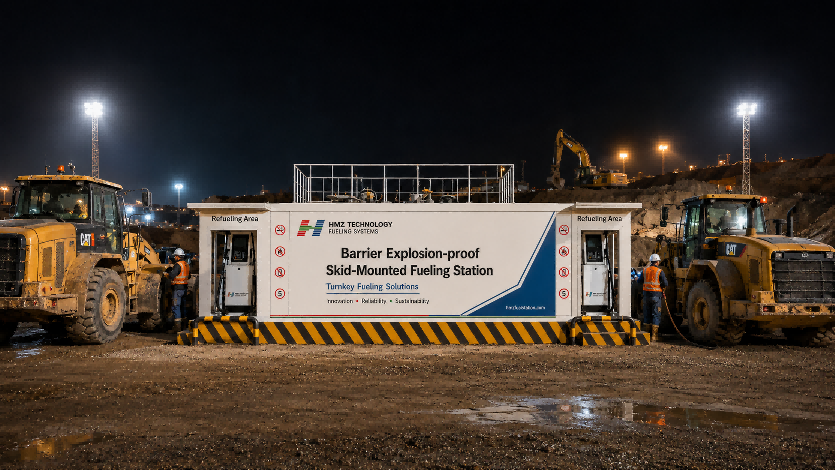
The fuel dispenser and flow rate directly affect refueling efficiency.
For small vehicles or light equipment, a standard flow rate may be enough. For heavy-duty trucks, mining equipment, buses, or large machinery, a higher flow rate may be required to reduce waiting time.
You should consider:
- Type of vehicles or equipment
- Number of vehicles refueled per day
- Required refueling speed
- Number of dispenser nozzles
- Metering accuracy
- Hose length and operating convenience
For high-demand projects, multiple dispensers or dual-nozzle systems may improve efficiency.
Choosing the right dispenser configuration can reduce refueling congestion and improve daily operation.
6. Evaluate Safety and Explosion-Proof Requirements
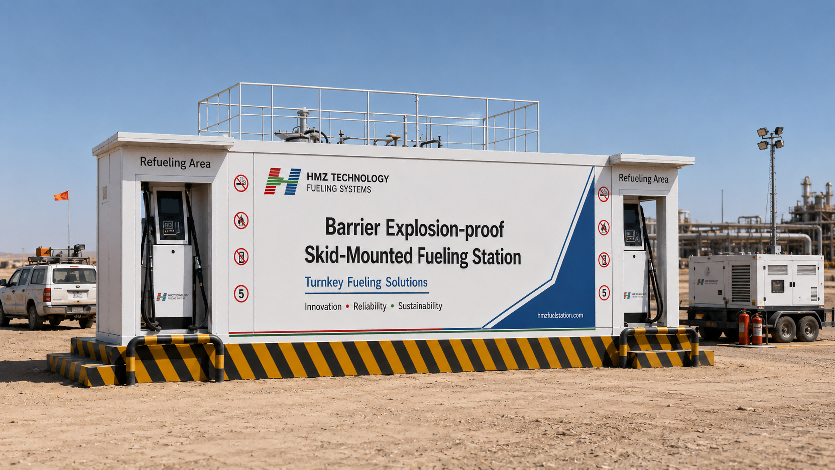
Fuel storage and dispensing involve safety risks. A mobile fuel station should not be treated as a simple tank. It should be designed as a complete fuel storage and dispensing system with proper safety protection.
Depending on your project environment, the system may need:
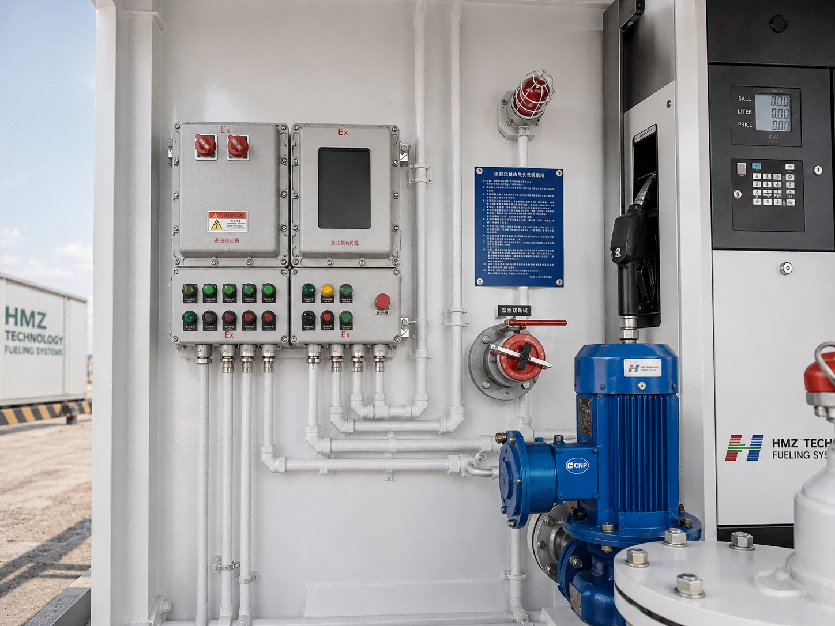
- Explosion-proof electrical components
- Emergency shut-off devices
- Leak detection system
- Fire protection system
- Ventilation design
- Anti-static grounding
- Overfill protection
- Safety valves
- Control cabinet protection
If the station is used in mining, oil and gas, chemical plants, industrial facilities, or hazardous areas, explosion-proof design becomes especially important.
A professional mobile fuel station should be designed according to the project’s fuel type, operating environment, and safety risk level.
7. Consider Mobility and Transportation Conditions
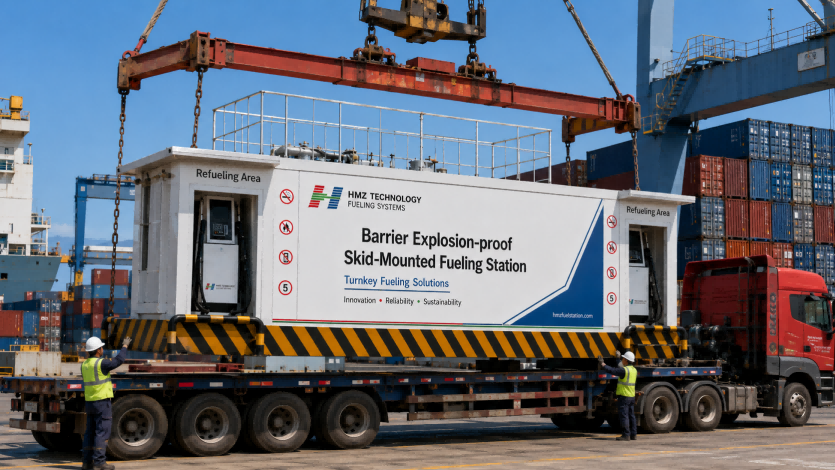
Not all mobile fuel stations move in the same way.
Some systems are skid-mounted and can be relocated by crane, forklift, or flatbed truck. Some are containerized for easier long-distance transport. Some are compact and suitable for smaller sites with limited space.
Before choosing the structure, consider:
- How often does the station need to move
- Road conditions to the site
- Lifting and unloading equipment availability
- Container transport requirements
- Site access width and height
- Installation foundation condition
For temporary projects, mobility is very important. For long-term industrial sites, a heavier and larger system may be acceptable if it provides better storage capacity and operational efficiency.
Skid-mounted fuel station vs traditional fuel station
8. Check Site Conditions Before Installation
The installation site has a direct impact on the station design.
Before ordering a mobile fuel station, you should evaluate the site environment, including:
- Available installation area
- Ground condition
- Drainage condition
- Distance from buildings and equipment
- Vehicle access route
- Power supply availability
- Local temperature and weather
- Fire safety distance requirements
- Environmental protection requirements
For desert, mining, tropical, coastal, or high-altitude environments, the system may need additional design considerations such as stronger structure, corrosion protection, weather protection, ventilation, or special electrical configuration.
Good site preparation can improve safety, operating efficiency, and equipment service life.
9. Decide Whether You Need a Fuel Management System
For small projects, manual fuel records may be enough.
But for larger projects with many vehicles, operators, or departments, a fuel management system can be very useful.
A fuel management system can help with:
- Fuel dispensing records
- Operator control
- Vehicle or equipment tracking
- Tank level monitoring
- Fuel inventory management
- Unauthorized fuel use reduction
- Better cost control
This is especially useful for mining companies, logistics fleets, construction contractors, large farms, and industrial facilities.
If fuel cost is a major part of your project operation, better fuel management can help reduce waste and improve transparency.
10. Consider Future Expansion
Your project may grow over time.
A construction project may enter a new phase. A mining site may expand to a larger working area. A logistics fleet may add more vehicles. A farm may increase machinery use during peak seasons.
When choosing a mobile fuel station, consider whether the system can support future expansion.
You may need:
- Larger tank capacity
- Additional dispenser
- Higher flow rate
- Fuel management upgrade
- Additional safety system
- Multiple fueling points
- Custom layout for future operation
A modular system gives you more flexibility when the project develops.
11. Choose a Reliable Supplier
The supplier is as important as the equipment itself.
A mobile fuel station involves tank design, fuel dispensing, pumping, piping, electrical control, safety protection, transportation, installation, and after-sales support.
When choosing a supplier, consider whether they can provide:
- Customized design support
- Engineering experience
- Clear technical proposal
- Suitable tank and dispenser configuration
- Explosion-proof and safety design options
- Manufacturing quality control
- Export and transportation experience
- Installation guidance
- After-sales technical support
A reliable supplier should understand not only the product, but also your project application and operating conditions.
Mobile Fuel Station Selection Checklist
Before requesting a quotation, you can prepare the following information:
| Selection Item | Information to Confirm |
|---|---|
| Application | Mining, construction, farm, logistics, oilfield, remote project |
| Fuel Type | Diesel, gasoline, or multiple fuels |
| Daily Fuel Consumption | Estimated liters per day |
| Tank Capacity | Required storage volume |
| Dispenser | Single nozzle, dual nozzle, or multiple dispensers |
| Flow Rate | Standard or high-flow refueling |
| Safety Requirement | Explosion-proof, fire protection, leak detection |
| Mobility | Fixed skid, relocatable skid, or containerized design |
| Site Condition | Ground, climate, access road, installation area |
| Fuel Management | Manual record or automatic fuel management system |
| Future Expansion | Additional capacity or dispenser options |
Preparing this information will help your supplier recommend a more accurate and practical solution.
Why Choose HMZ Mobile Fuel Stations?
HMZ Technology provides customized mobile fuel stations and skid-mounted fuel station solutions for industrial and remote-area applications.
Our systems can be designed according to your project requirements, including tank capacity, fuel type, dispenser configuration, pump system, flow rate, explosion-proof components, safety system, control cabinet, and fuel management options.
Whether your project is a mining site, construction camp, logistics yard, farm, oilfield, or remote industrial facility, HMZ can help you design a practical fuel storage and dispensing solution.
Conclusion
Choosing the right mobile fuel station requires more than selecting a fuel tank.
You need to consider your project application, fuel consumption, tank capacity, dispenser configuration, safety requirements, mobility, site conditions, fuel management needs, and future expansion plan.
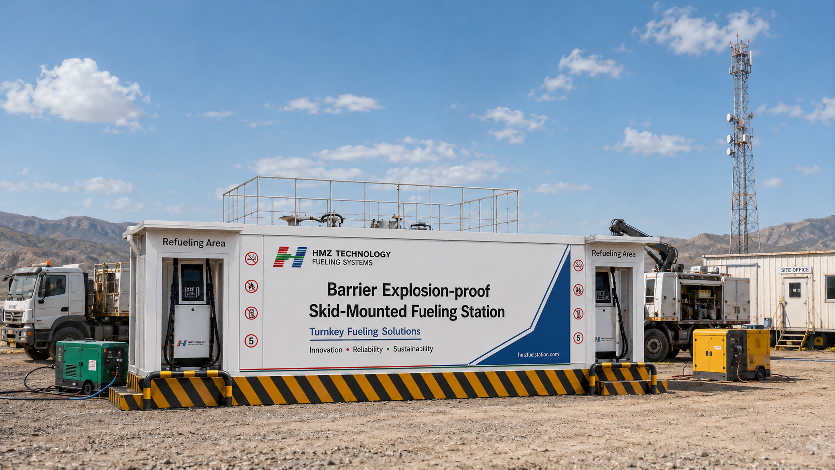
For industrial and remote projects, a well-designed mobile fuel station can help reduce downtime, improve fuel control, support safer operation, and provide a reliable fuel supply where traditional fuel stations are not practical.
If you are planning a project and need a customized mobile fuel station, HMZ Technology can help you evaluate your requirements and recommend a suitable solution.
Contact HMZ Technology today to request a customized mobile fuel station proposal for your project.
