
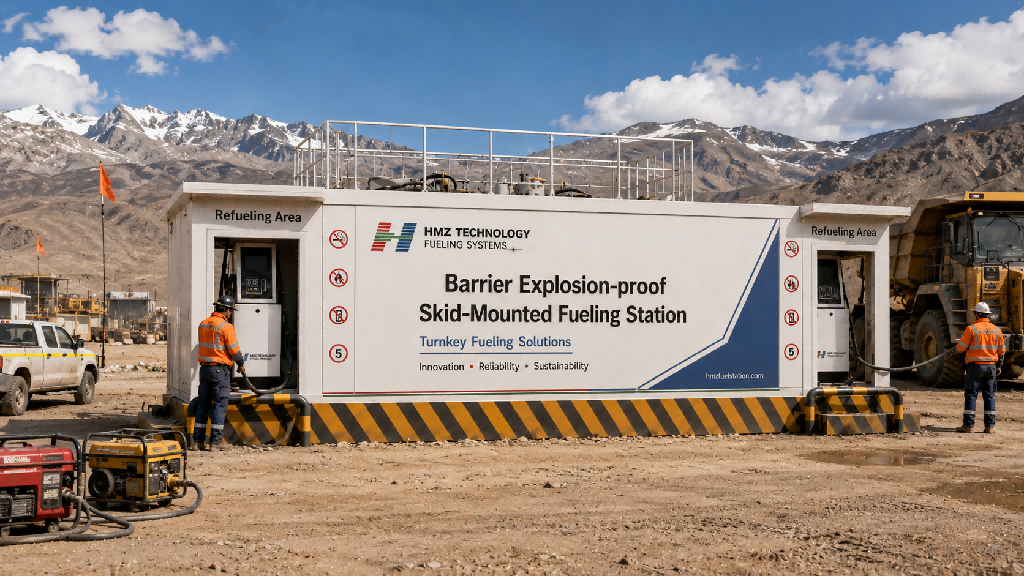
Reliable fuel supply is one of the biggest challenges for remote projects.
Mining camps, construction sites, oil and gas fields, farms, islands, temporary industrial zones, and remote power projects often operate far away from public fuel stations and city infrastructure. Vehicles, generators, heavy machinery, service trucks, and support equipment all depend on stable fuel availability.
However, building a traditional fuel station in a remote area can be expensive, slow, and difficult. Civil construction, transportation, installation, safety requirements, power supply, and site preparation may all create challenges.
This is why containerized fuel stations are becoming a practical solution for remote-area fuel supply.
A containerized fuel station integrates fuel storage, dispensing, pumping, piping, safety protection, and control systems into a containerized structure. It is designed for easier transportation, faster deployment, and safer on-site fueling in locations where traditional fuel infrastructure is limited.
In this article, we will explain what a containerized fuel station is, why it is useful for remote areas, and how to choose the right solution for your project.
What Is a Containerized Fuel Station?
A containerized fuel station is a modular fuel storage and dispensing system built inside or based on a container-style structure.
It can include:
- Fuel storage tank
- Fuel dispenser
- Fuel transfer pump
- Piping system
- Filtration system
- Control cabinet
- Safety protection system
- Emergency shut-off system
- Optional fuel management system
- Optional lighting and weather protection
Unlike a traditional fuel station, a containerized fuel station is designed as a transportable and integrated solution. Most of the main components can be assembled before delivery, which reduces on-site installation work.
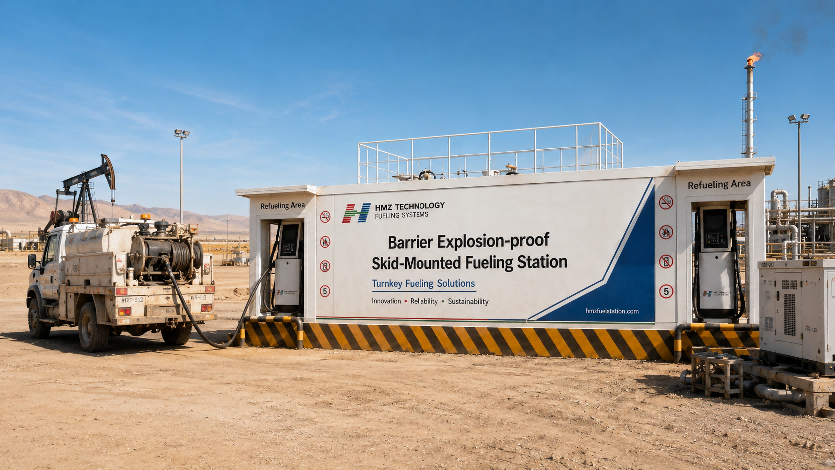
Containerized fuel stations are commonly used in remote industrial projects, mining sites, oilfield service areas, construction camps, logistics support yards, islands, farms, emergency fuel supply projects, and temporary infrastructure projects.
What a skid-mounted fuel station is and how it works
Why Remote Areas Need Reliable On-Site Fuel Supply
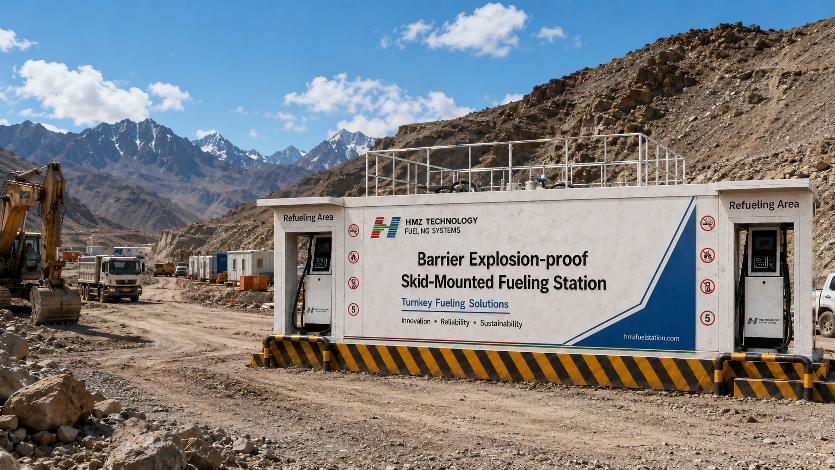
Remote projects often face unstable access to fuel.
In many areas, the nearest public fuel station may be a considerable distance away. Roads may be poor. Fuel delivery may be affected by weather, long distances, security issues, port delays, or limited local infrastructure.
For project owners, unreliable fuel supply can cause serious problems:
- Equipment downtime
- Delayed construction schedules
- Higher fuel transportation cost
- Reduced productivity
- Unplanned generator shutdown
- Increased vehicle travel time for refueling
- Difficult fuel inventory management
- Safety risks from temporary fuel storage
For remote projects, fuel is not only a supply material. It is part of the project’s operating foundation.
A containerized fuel station helps create a stable on-site fuel supply point, allowing vehicles, machines, and generators to refuel near the working area.
Main Advantages of Containerized Fuel Stations
Containerized fuel stations are especially suitable for remote areas because they combine mobility, protection, and modular design.
Easier Transportation
The containerized structure makes the station easier to transport by truck, trailer, or shipping route. This is useful for export projects, island projects, mining camps, and remote industrial sites.
Faster Deployment
Compared with building a traditional fuel station, a containerized fuel station can reduce on-site construction time. Many components are integrated before delivery, making installation faster and more practical.
Better Equipment Protection
The container-style structure can help protect the fuel system from harsh environments such as dust, wind, rain, sunlight, and remote site conditions.
Flexible Relocation
Remote projects may change location over time. A containerized fuel station can be relocated more easily than a permanent fuel station when the project needs change.
Integrated Fueling System
The system can combine fuel storage, dispensing, pumping, piping, safety, and control functions into one unit, reducing the need to purchase separate equipment from different suppliers.
Customizable Configuration
Containerized fuel stations can be customized according to tank capacity, fuel type, dispenser quantity, flow rate, safety system, power supply, and fuel management requirements.
Containerized Fuel Station vs Skid-Mounted Fuel Station
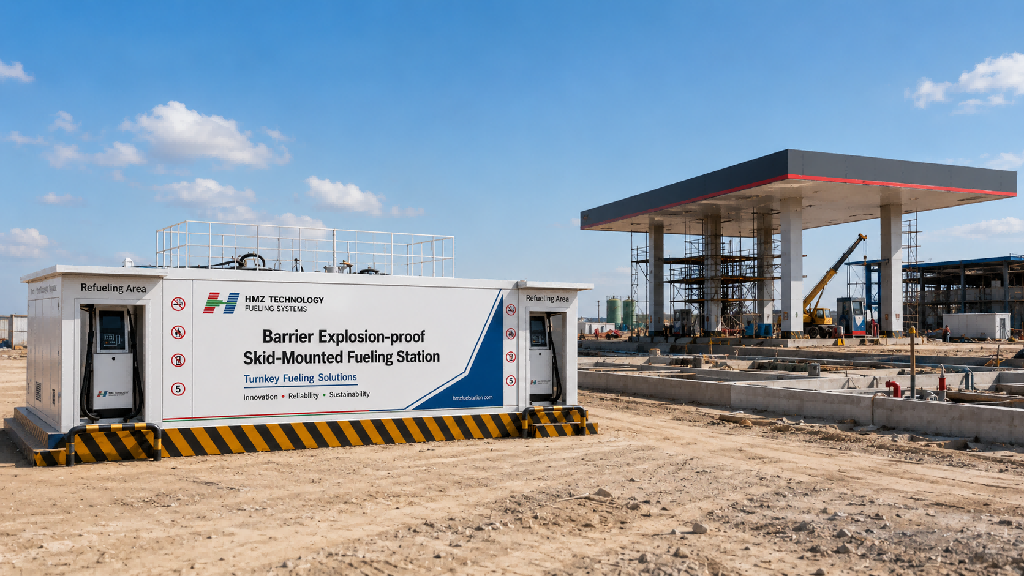
Containerized fuel stations and skid-mounted fuel stations are both modular fuel supply solutions, but they are not exactly the same.
A skid-mounted fuel station is usually built on a steel skid platform. It is compact, integrated, and suitable for fast deployment in mining sites, construction projects, farms, and industrial areas.
A containerized fuel station is built with a container-style structure. It is often preferred when the project needs a stronger enclosure, easier long-distance transportation, better weather protection, or a more protected equipment layout.
In simple terms:
| Item | Containerized Fuel Station | Skid-Mounted Fuel Station |
|---|---|---|
| Structure | Container-style enclosure | Steel skid platform |
| Transport | Suitable for long-distance shipping and remote delivery | Suitable for local relocation and flexible site use |
| Protection | Better enclosure and weather protection | More open and easier access |
| Application | Remote areas, export projects, islands, oilfield camps | Mining, construction, farms, industrial fueling |
| Customization | Highly customizable internal layout | Flexible modular configuration |
| Installation | Fast deployment with container-based structure | Fast deployment with skid-based structure |
The best choice depends on the transportation route, site environment, tank capacity, safety requirements, and daily operation needs.
Key Applications in Remote Areas
Containerized fuel stations can support many types of remote projects.
Mining Camps
Mining projects often require a stable diesel supply for heavy trucks, excavators, loaders, drilling machines, generators, and service vehicles. A containerized fuel station can provide centralized fuel storage and dispensing close to the mining service area.
Fuel solutions for mining sites
Construction Camps
Road construction, bridge projects, industrial parks, and infrastructure projects may be located far from public fuel stations. A containerized fuel station helps keep excavators, trucks, cranes, and generators working continuously.
Oil and Gas Fields
Remote oil and gas service areas often require a reliable fuel supply for vehicles, equipment, generators, and field operations. A containerized system can be designed with safety protection and a suitable electrical configuration for industrial environments.
Islands and Coastal Projects
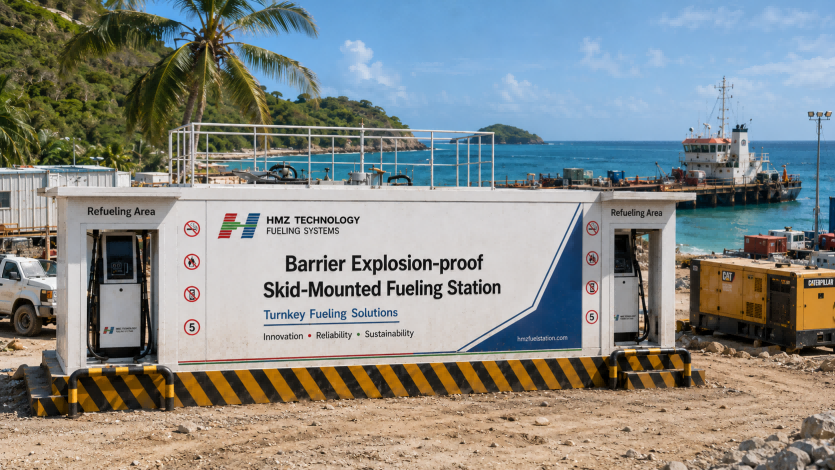
Island projects may face limited fuel access and high transportation costs. A containerized fuel station can be shipped and installed as a modular fuel supply point for vehicles, generators, boats, or project equipment.
Remote Farms and Agricultural Projects
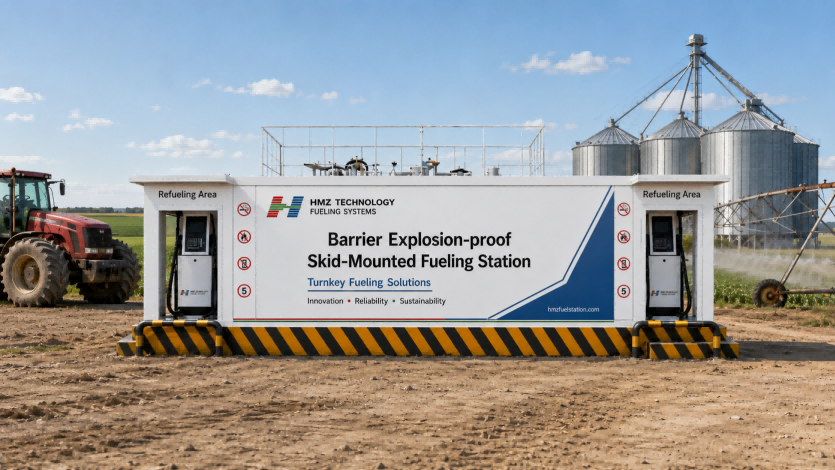
Large farms may need diesel for tractors, harvesters, irrigation pumps, and generators. A containerized or mobile fuel station can reduce the need for frequent trips to distant fuel stations.
Emergency and Temporary Projects
After storms, floods, power outages, or infrastructure disruptions, a temporary fuel supply may be needed for generators, rescue vehicles, and construction equipment. A containerized fuel station can support emergency fueling when permanent infrastructure is unavailable.
How to Choose the Right Containerized Fuel Station
Choosing the right containerized fuel station requires more than selecting a container size.
You should evaluate the full project requirement.
1. Confirm the Fuel Type
Most remote industrial projects use diesel, but some may require gasoline or multiple fuel types. If different fuels are needed, the system may require separate tanks, separate piping, or separate dispensers.
2. Calculate Daily Fuel Consumption
Estimate how much fuel your project uses per day. Consider vehicles, machines, generators, working hours, refueling frequency, and emergency reserve.
3. Decide the Tank Capacity
Tank capacity should match your fuel consumption, delivery cycle, site space, and transportation restrictions. For remote areas, reserve capacity is especially important because fuel delivery may not always be stable.
4. Choose the Dispenser and Flow Rate
For small vehicles, standard flow may be enough. For mining trucks, heavy machinery, buses, or large fleet operations, a higher flow rate or multiple nozzles may be needed.
5. Evaluate Safety Requirements
Fuel storage and dispensing require safety protection. Depending on the site, the system may need explosion-proof electrical components, emergency shut-off, leak detection, grounding, fire protection, ventilation, overfill protection, and safety valves.
6. Check Transportation and Site Access
Before choosing a containerized structure, check road conditions, lifting equipment, unloading method, bridge limits, site access width, and local transportation rules.
7. Consider Climate and Environment
Remote sites may face high temperatures, sand, dust, humidity, rain, corrosion, snow, or strong winds. The station design may need weather protection, corrosion-resistant treatment, ventilation, insulation, or a stronger enclosure.
8. Decide Whether You Need Fuel Management
For large projects, a fuel management system can help monitor fuel inventory, record dispensing volume, control operator access, reduce unauthorized fuel use, and improve cost management.
How to choose the right mobile fuel station
Safety Design for Remote Fuel Stations
Safety is especially important in remote locations because emergency response resources may be limited.
A containerized fuel station should be designed as a complete fuel storage and dispensing system, not just a simple fuel tank inside a container.
Important safety features may include:
- Emergency shut-off system
- Explosion-proof electrical components
- Fire protection system
- Leak detection system
- Anti-static grounding
- Ventilation system
- Overfill protection
- Safety valves
- Strong tank structure
- Proper piping and hose arrangement
- Clear maintenance access
The exact safety configuration should be based on fuel type, local requirements, operating environment, and project risk level.
Fuel Management for Remote Projects
In remote projects, fuel management is often difficult.
Without proper control, project owners may face problems such as inaccurate refueling records, unclear fuel inventory, fuel loss, unauthorized fuel use, and difficulty calculating fuel cost by vehicle or department.
A fuel management system can help improve transparency.
Depending on the configuration, it may support:
- Operator identification
- Vehicle or equipment records
- Refueling volume tracking
- Tank level monitoring
- Inventory reports
- Fuel usage analysis
- Unauthorized use reduction
- Better project cost control
For mining camps, construction camps, logistics fleets, and large industrial projects, fuel management can be as important as the fuel station itself.
Planning Checklist Before Requesting a Quotation
Before asking for a quotation, prepare the following information:
| Planning Item | Information to Confirm |
|---|---|
| Project Location | Country, region, remote site condition |
| Application | Mining, construction, oilfield, island, farm, emergency project |
| Fuel Type | Diesel, gasoline, or multiple fuels |
| Daily Consumption | Estimated liters per day |
| Tank Capacity | Required storage volume |
| Dispenser Quantity | Single nozzle, dual nozzle, or multiple dispensers |
| Flow Rate | Standard or high-flow refueling |
| Safety Requirement | Explosion-proof, fire protection, leak detection, grounding |
| Container Type | Compact unit, 20ft style, 40ft style, or customized structure |
| Transportation | Road, port, trailer, lifting method, site access |
| Climate | Desert, tropical, coastal, cold, high-altitude, dusty environment |
| Fuel Management | Manual operation or automatic management system |
| Expansion Plan | Future capacity or additional fueling points |
The more information you provide, the more accurate and practical the recommended solution will be.
Why Choose HMZ Containerized Fuel Stations?
HMZ Technology provides customized mobile, skid-mounted, and containerized fuel station solutions for remote industrial applications.
Our systems can be designed according to project requirements, including tank capacity, fuel type, dispenser configuration, pump system, flow rate, control cabinet, safety protection, explosion-proof components, containerized structure, and fuel management options.
For remote areas, HMZ can help customers evaluate transportation conditions, site environment, fuel demand, and equipment configuration to build a practical on-site fuel supply system.
Whether your project is a mining camp, construction site, oilfield service area, island project, farm, logistics yard, or emergency fuel supply project, HMZ can support your fuel storage and dispensing needs with customized solutions.
Conclusion
Remote projects need a reliable fuel supply to keep vehicles, machinery, generators, and industrial operations running.
Containerized fuel stations provide a practical solution by combining fuel storage, dispensing, pumping, safety protection, and control systems into a transportable structure.
Compared with traditional fuel station construction, they can offer faster deployment, easier transportation, better equipment protection, flexible relocation, and customized configuration for remote environments.
If your project is located in a remote area and needs a safe, reliable, and flexible fuel supply system, HMZ Technology can help design a suitable containerized fuel station based on your site conditions, fuel demand, and operating requirements.
Contact HMZ Technology today to request a customized containerized fuel station solution for your remote project.
