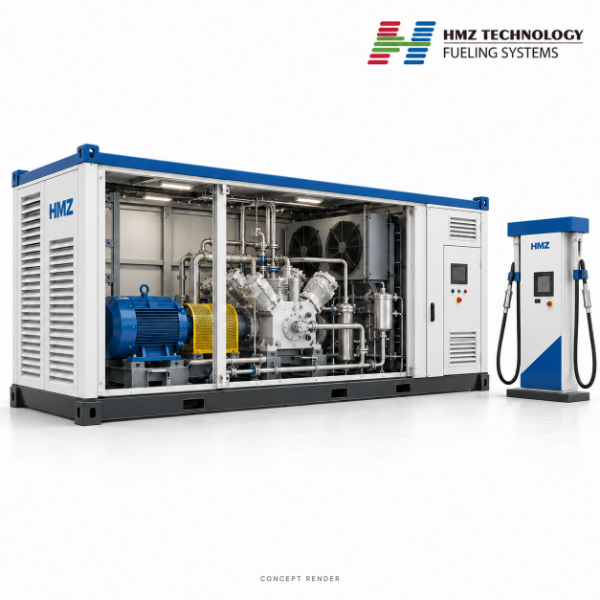
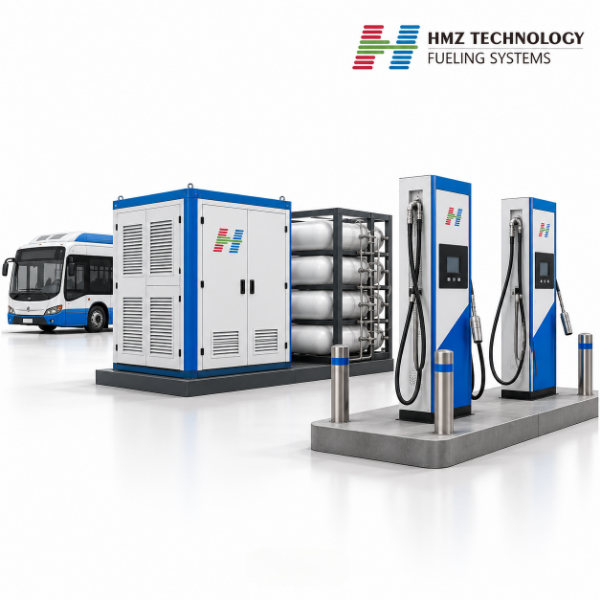
A containerized CNG daughter station is a modular vehicle refueling system supplied by CNG tube trailers rather than a local natural gas pipeline. A booster compressor supports vehicle filling as trailer pressure falls. The final package combines selected compression, cooling, control, and dispensing equipment to match the project.
HMZ offers project-based selection and supply coordination for containerized CNG daughter station packages. Send your gas supply conditions, daily demand, and destination requirements so we can prepare a proposed configuration and quotation.
Suitability depends on a reliable tube-trailer supply chain, available electrical power, site approvals, and the required refueling duty.
| Module | Configuration to Confirm |
|---|---|
| Trailer unloading interface | Connections, manifold, isolation, and unloading arrangements matched to the trailer. |
| Gas filtration | Filter type and separation requirements based on gas quality. |
| Booster compressor | Technology, capacity, inlet pressure range, and duty cycle selected for the project. |
| Cooling and ventilation | Selected for ambient conditions, heat rejection, and enclosure design. |
| Priority control and storage | Routing controls and an external storage cascade where required. |
| CNG dispensers | Quantity, hoses, metering, connectors and vehicle compatibility. |
| Controls and protective systems | PLC/HMI, emergency shutdown, gas detection and pressure protection as engineered. |
| Enclosure and electrical installation | Ventilated modular enclosure, maintenance access and electrical equipment selected for the site. |
Tube trailers, storage cylinders, dispensers, civil works, utilities and site installation are included only when expressly listed in the quotation. Containerized packaging does not mean every station component is installed inside one container.
| Parameter | Project Selection Basis |
|---|---|
| Gas source | CNG tube trailer; trailer pressure profile and changeover schedule to be confirmed. |
| Gas composition and quality | Gas analysis, moisture/dew point, contaminants and treatment requirements. |
| Compressor inlet pressure | Maximum, normal and minimum operating pressure; gauge or absolute pressure. |
| Required capacity | Daily demand, peak hourly demand and rated flow at specified inlet conditions. |
| Discharge and vehicle filling pressure | Selected for vehicle systems and applicable local requirements. |
| Electrical supply | Available voltage, phases, frequency and maximum site power. |
| Ambient conditions | Minimum/maximum temperature, altitude, humidity, dust and corrosion exposure. |
| Dispensing arrangement | Vehicle types, concurrent filling demand, hose count and connector type. |
| Dimensions and shipping | Confirmed after equipment selection and maintenance-clearance review. |
| Standards and documents | Destination-specific electrical, pressure equipment, metering and inspection requirements. |
Capacity is not a single fixed value across all trailer pressures. Quote comparisons should use the same inlet pressure, discharge pressure, gas conditions and normal-volume reference conditions. Motor power and package dimensions are confirmed after selection.
A mother station fills transport trailers for distribution. A vehicle-refueling daughter station receives trailer-delivered CNG and supplies vehicles. This product page covers the latter application.
The proposed daughter station receives CNG from tube trailers. It still needs suitable trailer access, utilities, site infrastructure, and approvals.
Trailer pressure decreases during unloading. A booster supports the required filling pressure as supply pressure falls. Its usable inlet range and capacity must be selected for the trailer and operating duty.
Only when listed in the agreed supply scope. The quotation should identify the trailer, unloading interface, compressor package, storage and dispensers separately.
Yes, subject to demand and site review. Fleet size, fuel consumption, vehicle filling pressure, and available fueling windows determine the appropriate configuration.
Site preparation, utility connections, installation checks, commissioning, and required approvals must be completed before operation. Containerized equipment does not remove these requirements.
Key factors include the compressor duty, pressure range, dispensing arrangement, storage, electrical requirements, documentation, and agreed supply scope. Price and delivery time are confirmed with the project quotation.
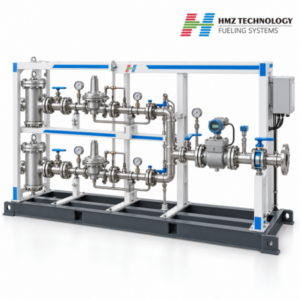
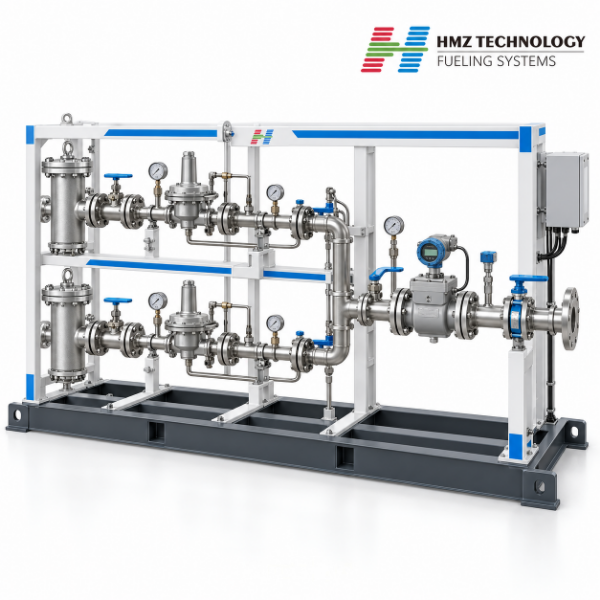
No. This package supports high-pressure vehicle refueling. An industrial CNG pressure reduction and metering skid reduces gas pressure for downstream industrial users.
Please provide the destination country, project location, vehicle types and quantities, daily gas demand, peak filling schedule, trailer pressure range, gas analysis, electrical supply, ambient temperature, altitude, and required standards. If available, include your site layout and intended supply boundary.
Request a Custom CNG Station Proposal or email hmzfuelstation@gmail.com.
We’ll reply within 1 business day. Please check for emails from an ‘@gmail.com‘ address.